
Introduction
Workplace safety is a critical concern for every organization, regardless of its size or industry. ISO 45001 Certification is an internationally recognized standard designed to help businesses create a safe and healthy working environment. Developed by the International Organization for Standardization, ISO 45001 provides a structured framework for managing occupational health and safety risks effectively.
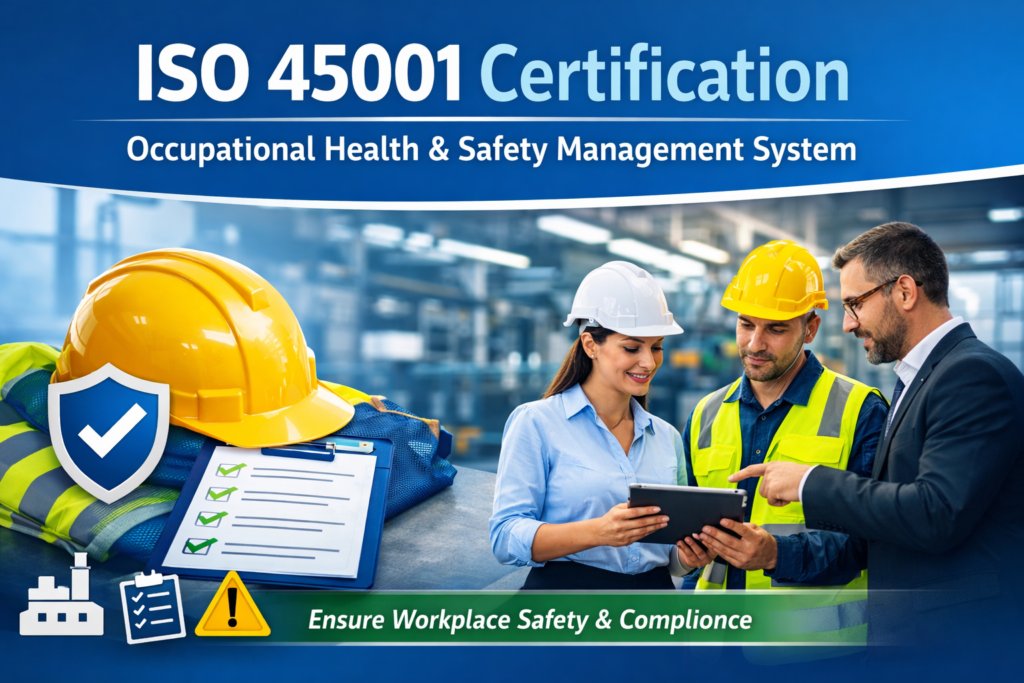
What is ISO 45001 Certification?
ISO 45001 Certification is part of the Occupational Health & Safety Management System (OHSMS). It helps organizations identify potential hazards, minimize risks, and improve overall workplace safety. This standard replaced OHSAS 18001 and aligns with other ISO standards, making it easier for businesses to integrate safety into their management systems.
Key Elements of ISO 45001
To achieve ISO 45001 Certification, organizations must implement the following key elements:
- Leadership Commitment: Top management must actively promote a safety culture.
- Risk Identification & Assessment: Identify hazards and take preventive measures.
- Legal Compliance: Ensure adherence to all safety regulations.
- Employee Participation: Involve workers in safety decisions and practices.
- Continuous Improvement: Regular audits and updates to improve safety performance.
Benefits of ISO 45001 Certification
Implementing ISO 45001 Certification offers multiple advantages:
- ✔️ Reduces workplace accidents and injuries
- ✔️ Enhances employee confidence and productivity
- ✔️ Improves company reputation and trust
- ✔️ Ensures compliance with legal requirements
- ✔️ Provides a competitive advantage in the market
Who Needs ISO 45001 Certification?
ISO 45001 Certification is suitable for all types of organizations, including:
- Manufacturing industries
- Construction companies
- Service providers
- Small and medium enterprises
Any organization that prioritizes employee safety can benefit from this certification.
ISO 45001 Certification Process
The process of obtaining ISO 45001 Certification involves:
- Gap Analysis: Identify current system gaps
- Documentation: Prepare required policies and procedures
- Implementation: Apply safety measures in operations
- Internal Audit: Evaluate system effectiveness
- Certification Audit: External audit by certification body
- Certification Issued: Receive ISO certificate
Conclusion
ISO 45001 Certification is more than just a compliance requirement—it is a commitment to protecting employees and improving workplace conditions. By adopting this standard, businesses can reduce risks, enhance efficiency, and build long-term credibility. Investing in ISO 45001 not only ensures safety but also contributes to sustainable business growth.